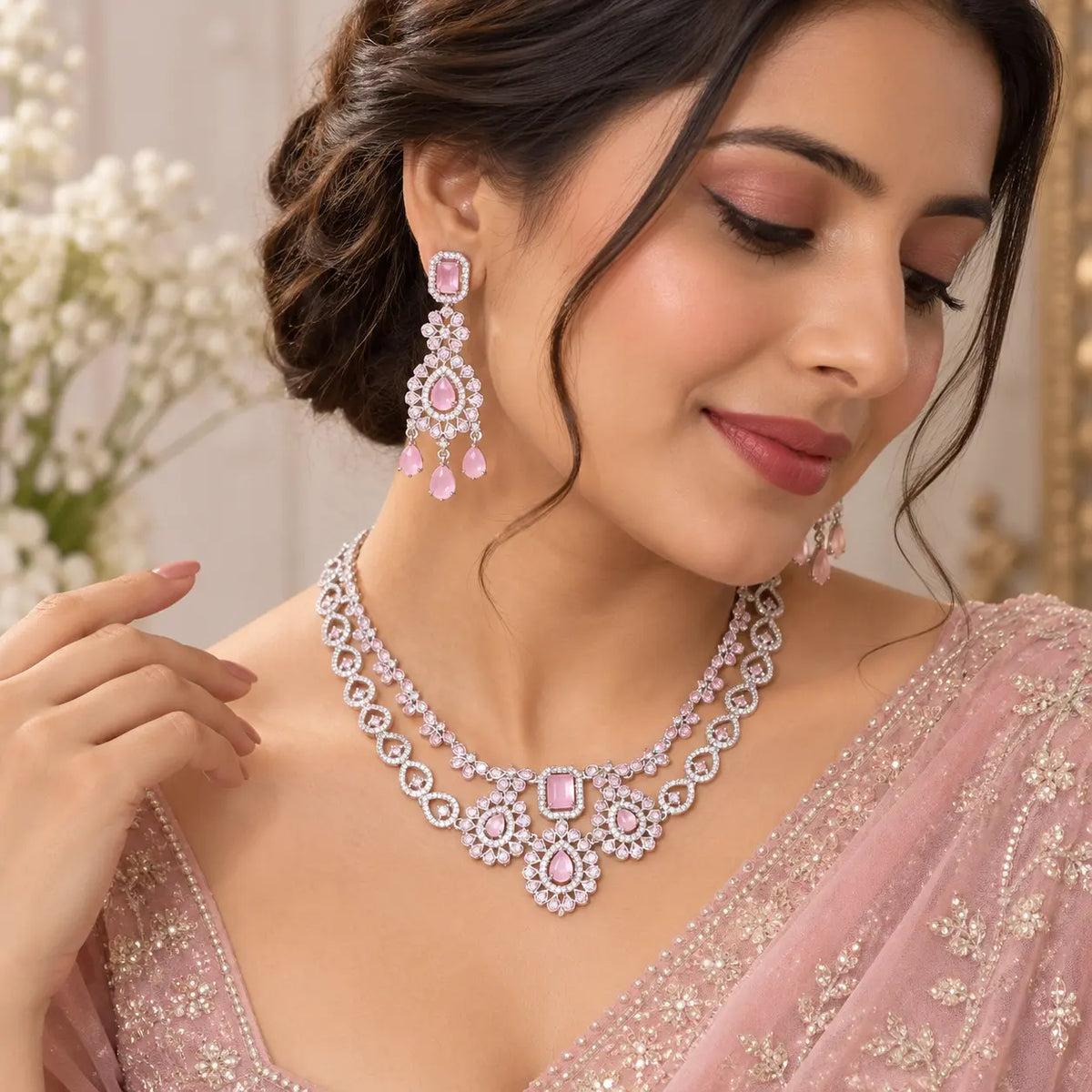
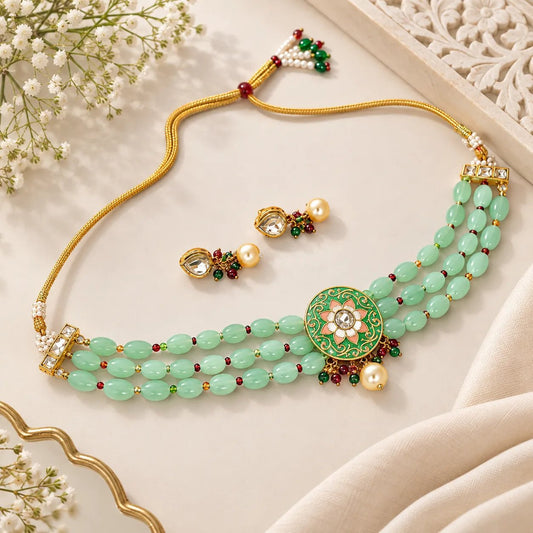
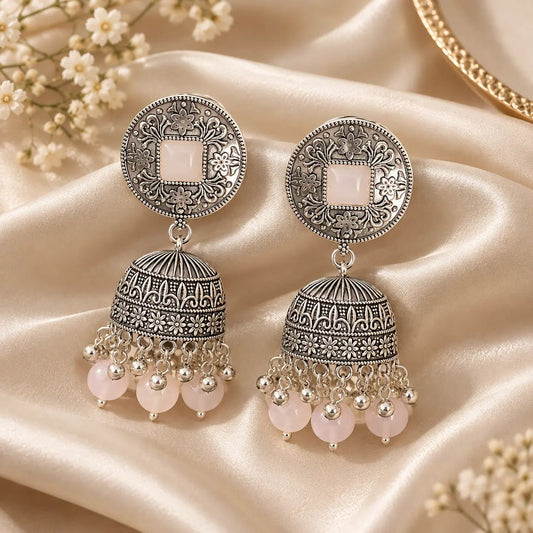
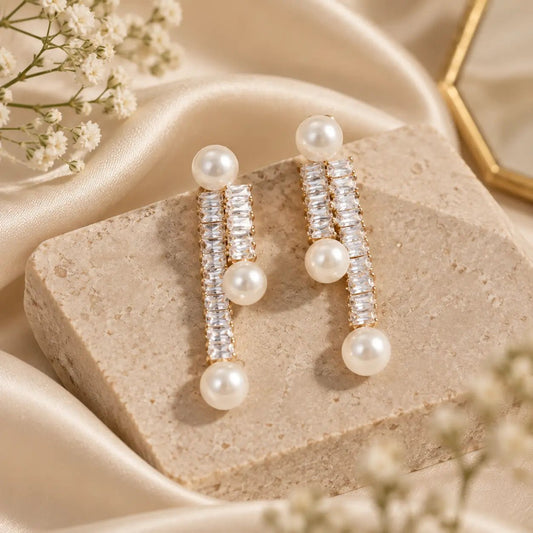
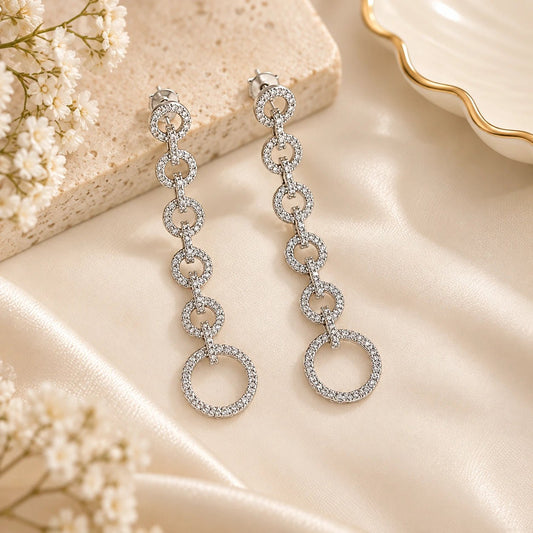
A single-layer necklace has one job to do — build up to the pendant. A double-layer one has to manage two lines of stonework moving down the neck at once, and most designs struggle to keep both layers feeling connected rather than like two separate necklaces worn together by accident. This one manages it by keeping the same stone-and-halo language running through both layers, so even with two full rows of stonework happening at once, it still reads as one necklace.
The Design, Looked at Closely
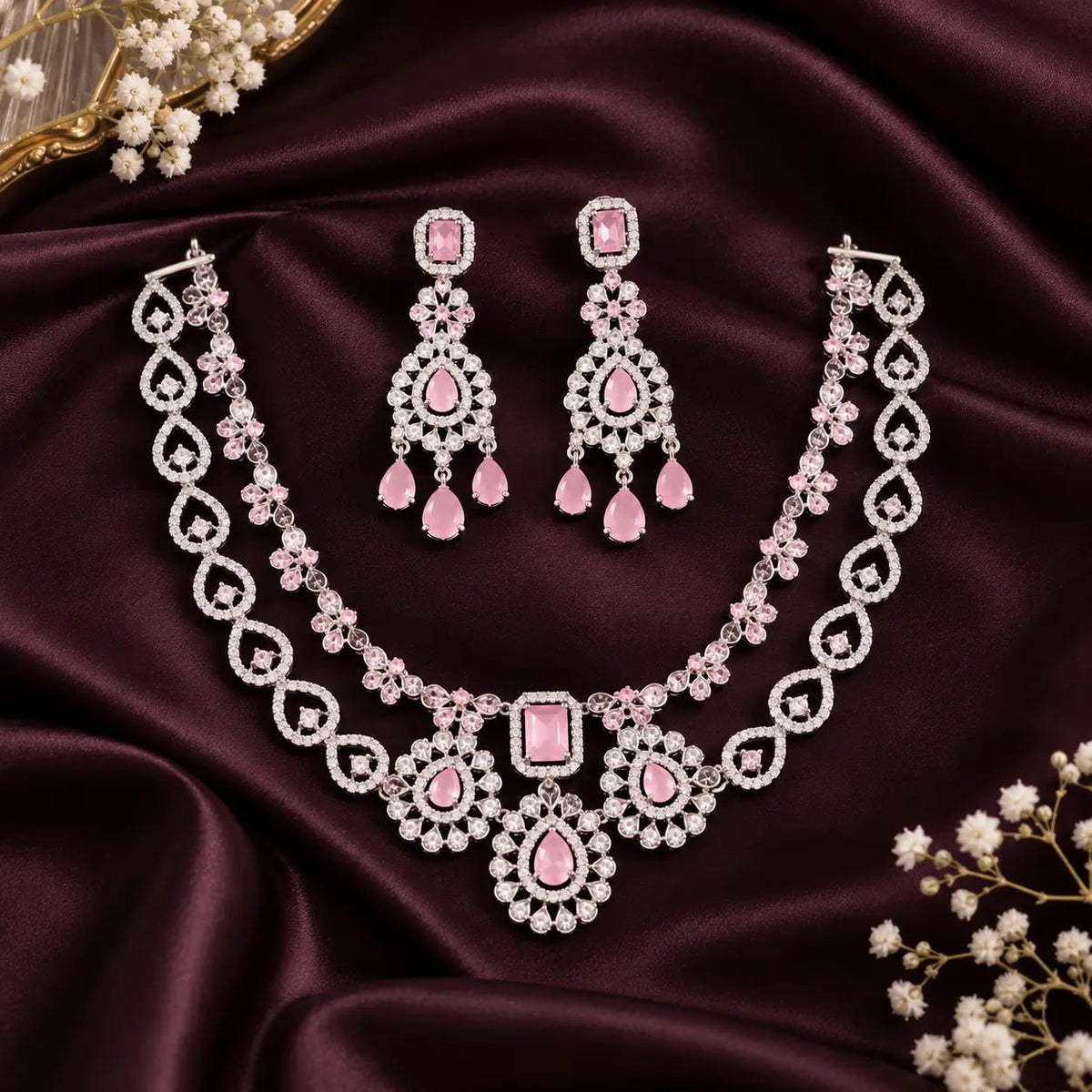
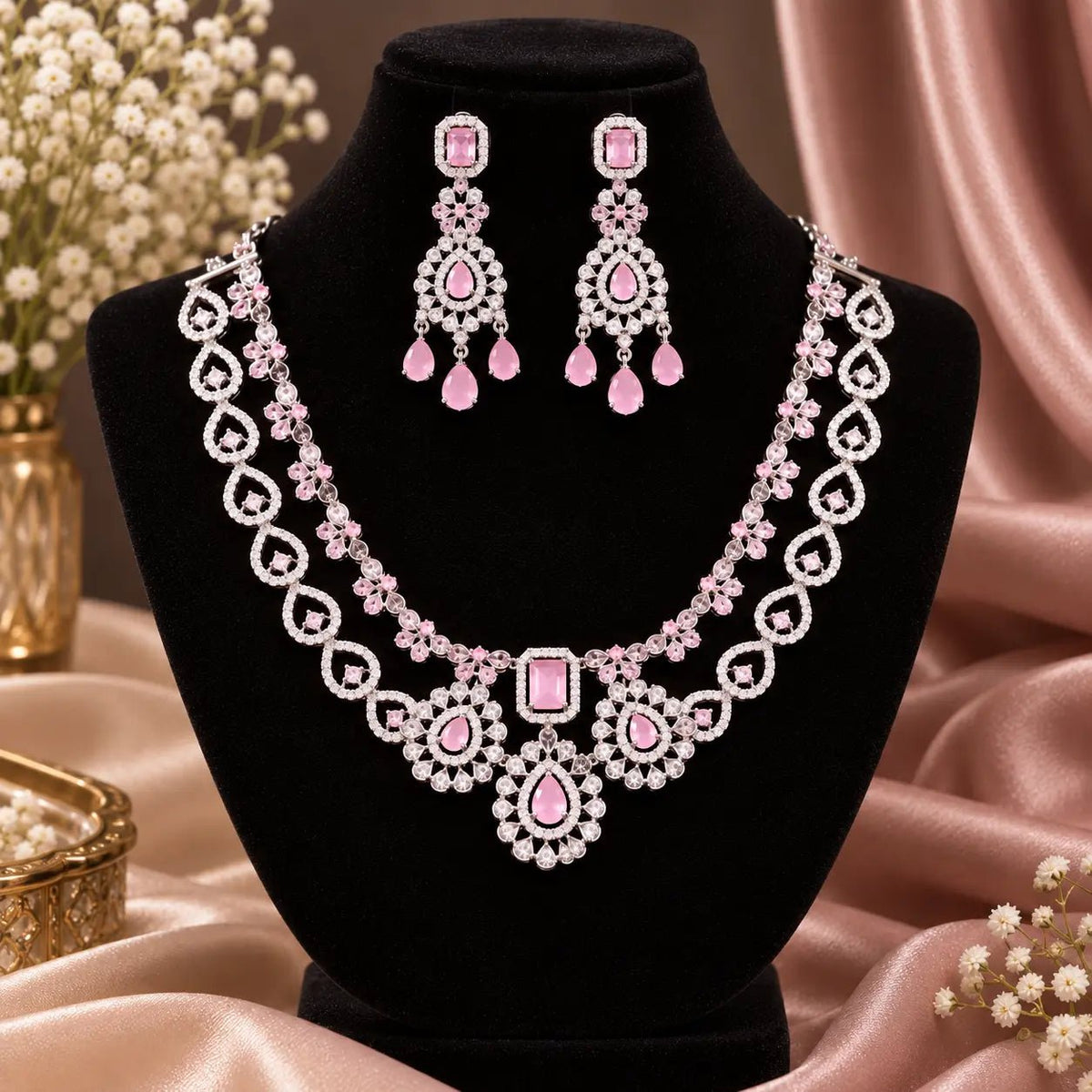
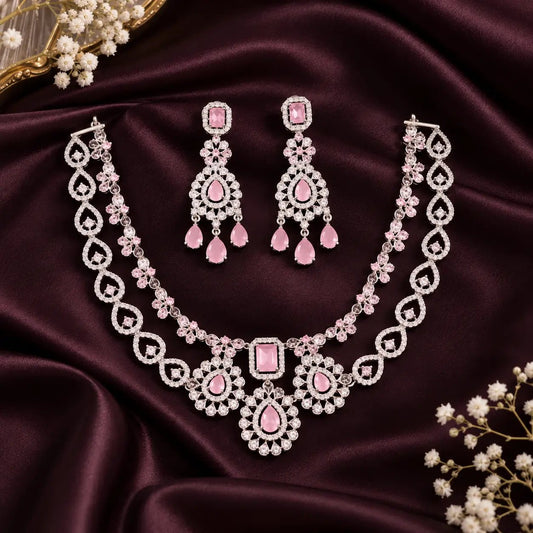
Start with the inner layer, sitting closer to the throat. It's built from a repeating sequence of small floral and geometric pavé links — tiny clustered flower shapes alternating with narrow teardrop-outlined sections, each one fully set in fine round stones. That inner row sits shorter and tighter than the outer one, following the curve of the neck closely rather than dropping low.
The outer layer runs slightly longer and looser, made up of larger teardrop and marquise-shaped links, each outlined in a halo of pavé stones with open space at the centre of each shape rather than solid stonework. That open centre matters — it keeps the outer layer from feeling as dense as the inner one, so your eye can actually tell the two layers apart instead of them blurring into one thick band of sparkle.
Both layers converge at the front into the necklace's centrepiece, and this is where the whole design earns its double-layer structure. A row of floral halo medallions sits across the collarbone, each one a cluster of small stones radiating out from a soft pink centre stone, alternating in shape between round and oval settings. At the very centre, a rectangular pink stone sits in its own halo, slightly larger than the medallions on either side, marking the true middle point of the necklace. And hanging just below that centre medallion, a single pear-shaped pink stone drops lower than everything else, finished in its own halo of pavé stones — the one point on the necklace where the eye is clearly meant to land last.
What makes the centrepiece work as a genuine convergence point, rather than just a pendant stuck onto two chains, is that the medallions echo the same halo construction used throughout both layers. Nothing about the centre section introduces a new visual idea — it's simply where the two layers' shared language reaches its fullest, densest expression.
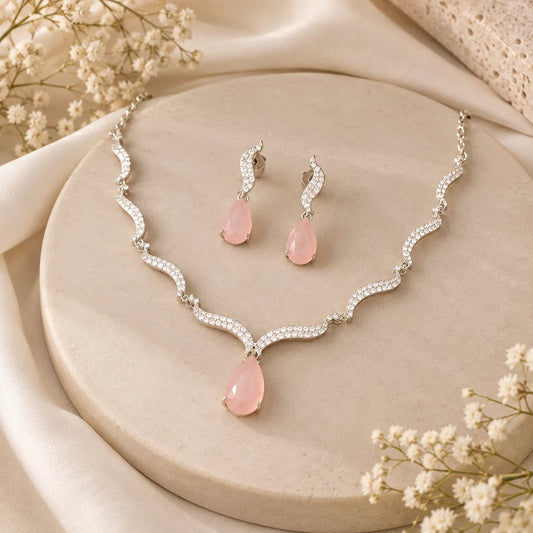
The earrings pick up that same structure. Each one opens with a small emerald-cut pink stone stud at the top, framed in a thin pavé border, then drops into a floral halo cluster matching the necklace's medallions, before finishing in a single pear-shaped pink stone with two smaller pear drops hanging just beneath it. Worn with the necklace, the earrings read as a direct continuation of the centrepiece rather than a separately designed match.
Specifications
| Detail | Specification |
|---|---|
| Product Type | Necklace and earring set |
| Style | Double-layer American diamond necklace with floral halo pink stone centrepiece |
| Base Metal | alloy base |
| Plating | Rhodium plated |
| Stones | American diamond (cubic zirconia) pavé throughout; soft pink centre stones in round, oval, rectangular, and pear cuts |
| Layer Structure | Inner layer of floral and geometric pavé links; outer layer of open-centre teardrop and marquise links |
| Centrepiece | Row of floral halo medallions, rectangular centre stone, pear-shaped drop at lowest point |
| Earring Design | Emerald-cut stud, floral halo cluster, pear-shaped drop with two smaller pear accents |
| Necklace Length | 17 inches |
| Earring Length | 4 inches |
| Included Pieces | 1 necklace, 1 pair of earrings |
| Ideal Occasion | Weddings, receptions, parties, festive and evening wear |
| Care | Keep away from perfume, water, and direct sunlight; store separately in a soft pouch |
Why the Two Layers Needed to Match in Language, Not Just Colour
The easiest way to build a double-layer necklace is to make two chains in the same stone colour and call it coordinated. That approach often ends up looking like two separate pieces worn together rather than one necklace, because nothing structurally ties the layers to each other beyond their shared tone. Here, both layers use the same core idea — pavé-set shapes with occasional open centres — just applied at different scales and different link shapes. That shared construction logic is what actually makes the two layers read as one necklace, rather than the colour match alone doing all the work.
Why the Centrepiece Sits Where It Does
Building the centrepiece as a horizontal row of medallions, rather than one single large pendant, lets it bridge both layers naturally. The medallions pick up visual width from the outer layer and density from the inner one, so the centrepiece doesn't feel like it belongs to just one of the two chains — it genuinely reads as the point where both converge. The single pear-drop hanging lowest at the centre is what gives the whole design a clear finishing point, rather than leaving the centrepiece as a flat, even row with nowhere for the eye to land last.
About the Pink Stone Colour
Worth noting directly: the centre stones throughout this set read as a soft, pale pink rather than a true ruby red. If this listing is meant to represent ruby-toned stones specifically, it's worth double-checking the actual stone shade against your product photos before publishing, since "ruby accents" typically implies a deeper red tone than what's visible here. If the pale pink shade is correct for this particular piece, updating the description language to reflect that will keep the listing accurate to what buyers actually receive.
Who This Set Actually Suits
This is occasion and evening jewellery, built for weddings, receptions, and parties where a double-layer statement necklace has room to be seen properly. The rhodium finish and soft pink stones work well with both western eveningwear and traditional outfits, pairing especially nicely with ivory, blush, silver, or pastel-toned fabric where the pale stone colour has something soft to sit against rather than competing with a bold, saturated outfit colour.
Styling It
Because the necklace already carries two full layers of detail, keep the rest of your jewellery minimal — a plain bracelet or a few thin rings are enough alongside it, without introducing another necklace or heavily stoned pieces that would compete with the layered structure. A neckline that leaves the collarbone visible, like a boat neck or a fitted strapless style, lets both layers sit properly instead of bunching against fabric.
Taking Care of It
The pavé links and the halo-set centrepiece both have plenty of small individual settings, which means they can collect residue from perfume, lotion, and handling more easily than a plainer chain would. Keep the set away from direct contact with either where you can, and store it flat and separately from other jewellery, since the two layers can tangle with each other if left loose. A soft, dry cloth run gently over the stone settings keeps the detail looking clear rather than dulled by buildup over time.
Why This One's Worth Considering
Plenty of double-layer necklaces treat the second layer as an afterthought, added mostly for length rather than design. This one doesn't — both layers share the same construction language, converge into a centrepiece that genuinely belongs to both, and carry that same structure through into the earrings. That kind of consistency across two layers and two pieces is harder to pull off than it looks, and it's exactly what gives this set its finished, considered feel.